


If you’re in that foggy postpartum chapter where your body feels unfamiliar, your digestion is unpredictable, and your mood is doing its own thing, you’re not alone. Everything from hormones to sleep deprivation to shifting nutrient needs can take your system for a spin. And if you’re dealing with hair shedding at the same time, it can feel like one more thing piling on.
Postpartum wellness can feel like rebuilding yourself brick by brick. And lately, one question keeps popping up for new moms:
Is it worth taking postpartum probiotics?
The short answer: they can be incredibly supportive but only when you choose the right kind, understand what they actually do, and know how they fit into your bigger postpartum health picture.
In this guide, we’ll walk through what postpartum probiotics are, the real science behind them, how to choose the right strains, how they fit with breastfeeding and hair recovery, and why a postpartum specific formula like Baby Blues can make a difference.
What Exactly Are Postpartum Probiotics?
Probiotics are beneficial bacteria that help support your gut, immune system, nutrient absorption, and even your emotional wellness through the gut brain axis. They’re the strains that help restore balance when your system has been through a lot. Pregnancy and birth shift your microbiome in big ways. Antibiotics during labor, stress, hormones, inflammation, sleep changes, and nutrient depletion can alter the balance of good bacteria.
Postpartum probiotics are formulas tailored for these very changes. They support repair, help digestion settle, and encourage a more stable internal environment so your recovery feels smoother and your energy feels more steady.
Think of them as a reset button for a gut that has been working overtime.
Why Does Your Microbiome Need Help After Birth?
Your microbiome goes through more during pregnancy and postpartum than people realize. Hormones rise and crash. Your immune system lowers during pregnancy then reactivates postpartum. Delivery itself is physically demanding. If you had a C section or antibiotics, the impact on your gut flora is even greater.
Here’s what typically happens postpartum:
- Slower gut motility
- Reduced microbial diversity
- Higher inflammation
- Lower mood regulating neurotransmitters
- Weaker gut barrier integrity
- Reduced nutrient absorption
These shifts can lead to bloating, digestive discomfort, fatigue, postpartum mood fluctuations, weakened immunity, low energy, and slower hair recovery. Postpartum probiotics help create a more stable foundation so your recovery can unfold with fewer bumps.
The Proven Benefits of Postpartum Probiotics
Better Gut Health and Easier Digestion
Probiotics help restore beneficial bacteria that support digestion and reduce discomfort. This is especially important if you took antibiotics during labor or delivery. A stable gut means better nutrient absorption which your postpartum body desperately needs.
Immune System Support
Around 70 percent of your immune system lives in your gut. Studies show that postpartum probiotic supplementation can support immune balance and help reduce inflammation which many moms experience during the healing period.
Emotional and Mood Support
Your gut produces a huge portion of serotonin. When the gut is stressed or imbalanced, your emotional landscape feels it. Research in postpartum women has found:
- Certain strains help reduce postpartum depression risk
- Others help support stress response
- The gut brain axis plays a major role in mood stability
This does not replace medical support for mood disorders but it can be a supportive tool that works alongside other postpartum care.
Healthy Weight Regulation After Birth
While postpartum weight shifts can feel overwhelming, probiotics help support metabolic balance through beneficial changes in the gut. They are not a weight loss product. Instead they help your body return to its natural baseline without extreme swings.
Breastfeeding Benefits For Both Mom and Baby
One of the most powerful research areas in postpartum probiotics is milk microbiome support. Maternal probiotics have been shown to:
- Influence beneficial bacteria in breast milk
- Support infant gut development
- Potentially reduce infant eczema risk
- Help reduce GI discomfort in some babies
- Your gut health truly becomes their gut health.
Better Nutrient Absorption and Hair Recovery
Strong gut health equals stronger nutrient absorption. Strong nutrient absorption supports hair restoration. When the gut is balanced, vitamins like biotin, zinc, and folate are absorbed more efficiently which can help support the hair regrowth process after shedding peaks.
Postpartum probiotics build the groundwork for everything else you take to work better.
What We Still Don’t Know Yet
Even though postpartum probiotics are incredibly promising, there are still some gray areas that science is working to fill in. Here’s what that actually means for you.
Not every strain is researched in postpartum women
Brands often use strains that have only been studied in the general population. Postpartum women have unique physiology hormone fluctuations, nutrient depletion, inflammatory changes, breastfeeding demands, emotional shifts so not every strain that works in the average adult will work the same way for a new mom.
This is why choosing strains intentionally designed for postpartum is so important.
Dosages vary dramatically across brands
Some probiotics use huge CFU counts as a selling point while others use smaller ones supported by real research. But more isn’t automatically better. A strain that performs well at 10 billion CFU may not work any better at 60 billion.
What matters most is choosing well-researched strains at effective doses, not the loudest number on the bottle.
More long-term research is needed
Most postpartum probiotic studies follow women for 8 to 12 weeks. A few continue for six months, but very few track women for a year or more. That means scientists are still learning how probiotics influence long-term mood, metabolism, infant gut development, and overall maternal health. The early evidence is strong, but not final.
Probiotics should be strain-specific, not generic blends
A label that says “probiotic blend” tells you almost nothing. Different strains do different things. One may help your mood. Another aids digestion. Another supports immunity. Another reduces inflammation.
Without specific strain names, you have no idea what you’re taking or whether it’s supported by any postpartum research at all.
They cannot replace medical treatment
Probiotics can support mood, immunity, digestion, and nutrient absorption, but they’re not a treatment for postpartum depression, thyroid conditions, gut diseases, or nutritional deficiencies.
They’re a tool not the whole toolbox. Where they shine is working alongside your postpartum care plan.
They work best as part of a full postpartum wellness routine
Probiotics aren’t a magic wand. They’re a foundation. To feel your best, especially with hair regrowth and energy, they work best when paired with:
- A balanced postpartum vitamin
- Consistent hydration
- Adequate fiber
- Rest (as much as motherhood allows)
- Blood sugar balanced meals
- Emotional support when needed
When combined with these habits, probiotics can make a meaningful difference in your recovery.
How to Choose a High-Quality Postpartum Probiotic
This is the part most moms wish someone explained before they stared at 40 identical-looking bottles on a store shelf. Here’s what actually matters and why.
Look for strain transparency
You want specific strain names like Lactobacillus rhamnosus HN001, not vague “proprietary blends”.
Strain transparency ensures you’re getting scientifically supported bacteria, not random fillers or low-quality strains thrown together for marketing.
Check CFU counts that actually matter
Many brands chase high CFU numbers to look impressive. But here’s the truth:
- A smaller amount of the right strain works better than a huge amount of the wrong one.
- CFU counts only matter when combined with good survivability (the ability to reach your gut alive).
- Research-backed CFUs for postpartum health are usually in the moderate range, not ultra-high megadoses.
So focus on the quality and relevance of the strain, not the size of the number.
Make sure it is third-party tested
You want guarantees that your probiotic:
- Contains what the label promises
- Is free of harmful contaminants
- Uses safe and effective dosages
Third-party testing protects you from low-grade formulas that cut corners on quality, stability, and strain integrity.
Choose strains that support immunity, moods, and digestion
Certain strains are better researched for postpartum needs. Lactobacillus and Bifidobacterium families are often studied for:
- Gut recovery after childbirth
- Immune support
- Mood regulation via the gut brain axis
- Digestive comfort
- Skin and inflammatory balance
- Supporting breast milk immune factors
These strains show up repeatedly in postpartum research for a reason they do the heavy lifting moms need.
Verify it’s breastfeeding friendly
Most probiotics are safe for breastfeeding, but not all are designed with breastfeeding in mind.
A breastfeeding-friendly probiotic means:
- It won’t interfere with milk supply
- It supports the milk microbiome
- It may positively influence your baby’s gut flora
A postpartum-specific probiotic should always meet this standard.
Avoid fillers or unnecessary extras
- You want clean ingredients.
- No artificial colors.
- No artificial sweeteners.
- No low-quality stabilizers.
No ingredients you can’t pronounce.
Your postpartum body is sensitive. Less is more.
Choose a formula created for postpartum needs
Most probiotics are generic adult formulas repackaged for moms. But postpartum bodies need support across:
- Hormone shifts
- Healing and inflammation
- Immune function
- Nutrient absorption
- Mood stability
- Breastfeeding demands
Baby Blues Probiotics were formulated with all of this in mind which is why they’re such a strong fit for postpartum and breastfeeding moms.
How to Add Postpartum Probiotics to Your Daily Routine
Here’s how to make probiotics an effortless part of your postpartum rhythm even if you’re running on three hours of sleep and a cold cup of coffee.
When to take them
Morning. Afternoon. Night.
It genuinely doesn’t matter as much as people think.
What matters is being consistent so your gut gets a steady supply of beneficial bacteria.
Many moms like taking probiotics with breakfast because it’s easier to remember.
How long should you take them
The research varies but here’s a simple guide:
- For general gut support: 8 to 12 weeks
- For emotional and mood support: 10 to 24 weeks
- For breastfeeding and infant gut support: as long as you’re nursing
- For postpartum nutrient absorption and hair recovery: 3 to 6 months minimum
Most moms feel best staying on probiotics throughout the postpartum year. There’s no harm in long term use with a high quality product.
Pair them with
Fiber rich foods
Fiber feeds the good bacteria you’re taking, helping them flourish.
Proper hydration
Water helps regulate digestion and supports gut transport.
A postpartum multivitamin or hair vitamin
A healthy gut absorbs nutrients better which makes your vitamins more effective.
Gentle movement
Even a short walk improves gut motility.
Sleep hygiene
The gut and circadian rhythm are linked. When one is thrown off, the other follows.
What to watch for
Look for small but meaningful changes as your gut rebalances:
- Less bloating
- More regular digestion
- Improved mood stability
- More consistent energy
- Decreased stomach sensitivity
- Better nutrient absorption
- Stronger hair regrowth when paired with Baby Blues hair vitamins
These are the subtle signs that your gut is becoming more stable.
When to check with a doctor
Probiotics are generally safe but you should get medical input if:
- You are immunocompromised
- You have a chronic gastrointestinal condition
- You’re on medications that suppress the immune system
- You experience unusual or worsening symptoms
Better safe than stressed.
Why Baby Blues Probiotics Gummies Are Uniquely Designed for Postpartum Moms
Ready to support your postpartum recovery?
Try Baby Blues Postpartum Probiotics today and give your gut, mood, and overall health the support it deserves. Click here to learn more and shop now!
Buy Now!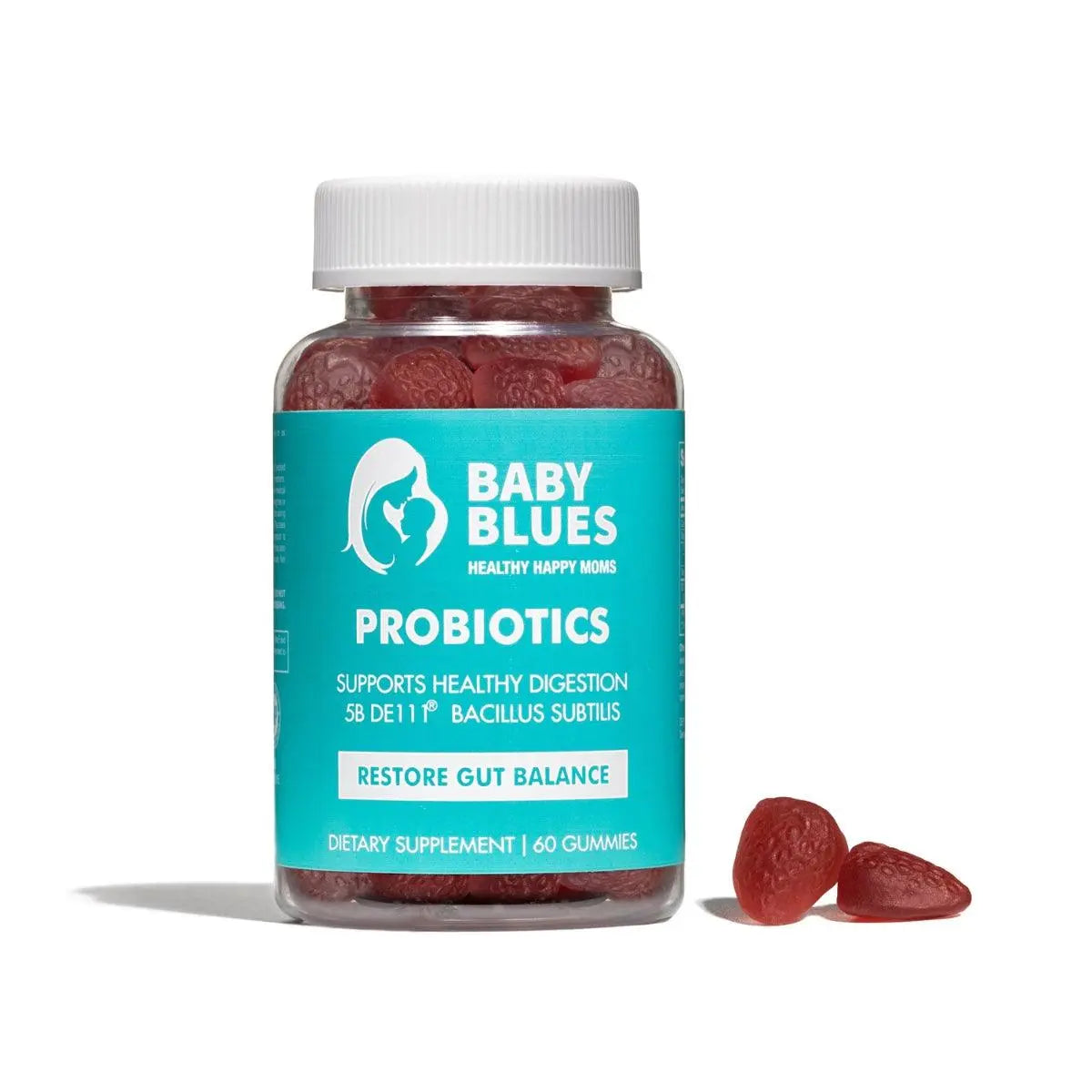
Baby Blues created probiotics specifically for mothers rebuilding after birth. The formula supports the areas moms struggle with most.
Key advantages of Baby Blues Probiotics Gummies
Expert selected strains
Chosen to support postpartum gut repair immunity, nutrient absorption and emotional balance.
Designed for breastfeeding moms
Safe for you and beneficial for your baby’s microbiome.
Supports hair recovery
A healthy gut means improved absorption which supports the ingredients in the Baby Blues hair vitamins.
Clean minimal ingredient list
- No unnecessary fillers or irritants.
- Formulated for real mom life
- Low sleep schedules
- High nutrient demand
- Shifting hormones
- Stressful routines
Baby Blues built this probiotic to meet your biology exactly where it is.
Conclusion
Postpartum can feel like a season of constant change. Your body is healing, your hormones are recalibrating, and your energy is stretched between a dozen different needs at once. Through all of that, your gut plays a bigger role than most people ever tell you. When your microbiome is supported, everything else feels a little more manageable. Digestion steadies. Mood feels more anchored. Nutrients absorb more efficiently. Even hair recovery begins to feel less uphill.
Probiotics are not a magic fix. They are a quiet daily support system that helps your body return to balance in a time when balance feels hard to come by. They give your gut the reinforcements it needs so you can show up for yourself with more strength and clarity.
The Baby Blues Probiotics were created for this exact chapter of motherhood. Clean ingredients. Thoughtful postpartum focused strains. A formula built to help your recovering body feel nourished rather than depleted. When paired with the rest of your self care toolkit, they become a meaningful part of your healing journey.


