


In recent years, you’ve likely heard a lot about the importance of gut health. But did you know that the secret to a healthy gut might lie in two special types of nutrients: probiotics and prebiotics? While both play vital roles in supporting your digestive system, immune health, and even your mood, they are often misunderstood.
In this article, we’ll dive into what probiotics and prebiotics are, how they work together, and why they’re particularly beneficial for new moms navigating postpartum recovery.
1. What Are Probiotics?
Probiotics are live microorganisms, often referred to as "good bacteria," that offer various health benefits when consumed in adequate amounts. While the word "bacteria" may sound intimidating, the right kinds of bacteria are essential for your health. They help balance your gut microbiome (the ecosystem of bacteria in your gut), ensuring it’s filled with good bacteria that support healthy digestion and overall wellness.
Benefits of Probiotics:
Digestive Health: Probiotics are well-known for improving digestion and helping with issues like bloating, constipation, and diarrhea.
- Immune Support: A balanced gut microbiome is crucial for a strong immune system. Probiotics help reinforce the gut lining, making it more difficult for harmful pathogens to enter the bloodstream.
- Mental Health: Research has shown a connection between gut health and mental health, often called the "gut-brain axis." Probiotics may play a role in reducing symptoms of anxiety and depression by improving the gut microbiota.
Sources of Probiotics:
Probiotics are found in a variety of fermented foods, which have been naturally cultured with beneficial bacteria. Here are some common sources:
- Yogurt (especially those labeled with "live and active cultures")
- Kefir (fermented milk drink)
- Kimchi (fermented cabbage)
- Sauerkraut
- Miso soup
You can also take probiotics through supplements, available in capsules, powders, or liquid form, if it's difficult to consume these foods regularly.
2. What Are Prebiotics?
Prebiotics, unlike probiotics, are a type of fiber that serves as food for the good bacteria in your gut. Prebiotics are not digested by your body, but they provide nourishment for the beneficial bacteria, allowing them to thrive and multiply. A healthy gut microbiome relies on prebiotics to maintain the optimal balance of good bacteria.
Why Prebiotics Matter:
- Gut Health: Prebiotics help feed the good bacteria that probiotics introduce into the gut. This balance is essential for maintaining digestive health and overall well-being.
- Immune Support: Prebiotics play a role in strengthening the immune system by helping maintain a balanced microbiome.
- Mental Health: As with probiotics, prebiotics also contribute to the gut-brain axis, helping improve mood and cognitive function.
Common Sources of Prebiotics:
Prebiotics are found in foods rich in fiber, particularly those containing non-digestible carbohydrates. Here are some prebiotic-rich foods:
- Bananas (especially slightly green ones)
- Garlic
- Onions
- Leeks
- Asparagus
- Whole grains (e.g., oats, barley)
Supplements are also available for prebiotics, often in powder or capsule form.
3. Probiotics vs. Prebiotics: What’s the Difference?
At first glance, probiotics and prebiotics may seem like the same thing, but they serve different purposes in your gut health.
- Probiotics: These are live microorganisms (good bacteria) that are introduced into the gut through food or supplements. They support digestion, immune health, and even mental well-being.
- Prebiotics: These are types of fiber that feed the good bacteria already in your gut, helping them grow and thrive. Prebiotics enhance the effectiveness of probiotics by nourishing the beneficial bacteria in the gut.
The two work hand-in-hand probiotics populate the gut with healthy bacteria, while prebiotics help those bacteria grow and maintain a healthy balance.
4. How Do Probiotics & Prebiotics Affect Your Health?
Both probiotics and prebiotics have a profound impact on your health, influencing several aspects of well-being, from digestion to mental health.
Digestive Health:
A healthy gut microbiome is essential for smooth digestion. Probiotics can help alleviate common digestive issues such as:
- Constipation: Probiotics can help regulate bowel movements and improve stool consistency.
- Bloating and Gas: Probiotics may reduce bloating and excess gas, especially after meals.
- Irritable Bowel Syndrome (IBS): Studies have shown that probiotics can help manage IBS symptoms, providing relief from cramps and irregular bowel movements.
Immune System Boost:
Your gut is home to a significant portion of your immune system, and probiotics play a role in keeping it strong. A balanced gut microbiome prevents the overgrowth of harmful bacteria and helps your immune cells identify and destroy pathogens.
Mental Health:
The gut-brain connection is becoming increasingly recognized. Probiotics, by supporting gut health, may help reduce symptoms of anxiety and depression. Prebiotics also support mental health by enhancing the function of the gut microbiome.
Skin Health:
Gut health is also linked to skin health. A well-balanced gut microbiome can help reduce inflammation, potentially improving conditions like acne or eczema.
5. Special Focus on Postpartum Gut Health
After giving birth, your body goes through various hormonal and physical changes. Postpartum, many new moms experience digestive issues like constipation, bloating, and discomfort, often due to hormonal shifts and the stress of caring for a newborn. Probiotics and prebiotics can be incredibly helpful during this time.
How Probiotics & Prebiotics Benefit New Moms:
- Restoring Gut Health: After childbirth, antibiotics are often prescribed, which can disturb the balance of your gut microbiome. Probiotics can help restore that balance.
- Relieving Constipation: Postpartum constipation is common due to hormonal changes, dehydration, and changes in diet. Probiotics can help regulate bowel movements and reduce bloating.
- Improving Mood: Hormonal shifts and the challenges of new motherhood can affect mood and mental health. Probiotics can help by supporting the gut-brain axis and boosting mental well-being.
- Boosting Energy: Healthy digestion and a balanced microbiome can help alleviate fatigue, a common challenge for new mothers.
Support Your Postpartum Health Today
Boost your gut health and overall well-being with Baby Blues Probiotic Gummies. Specially designed to support new moms, these gummies promote digestive balance and immune support.
Buy Now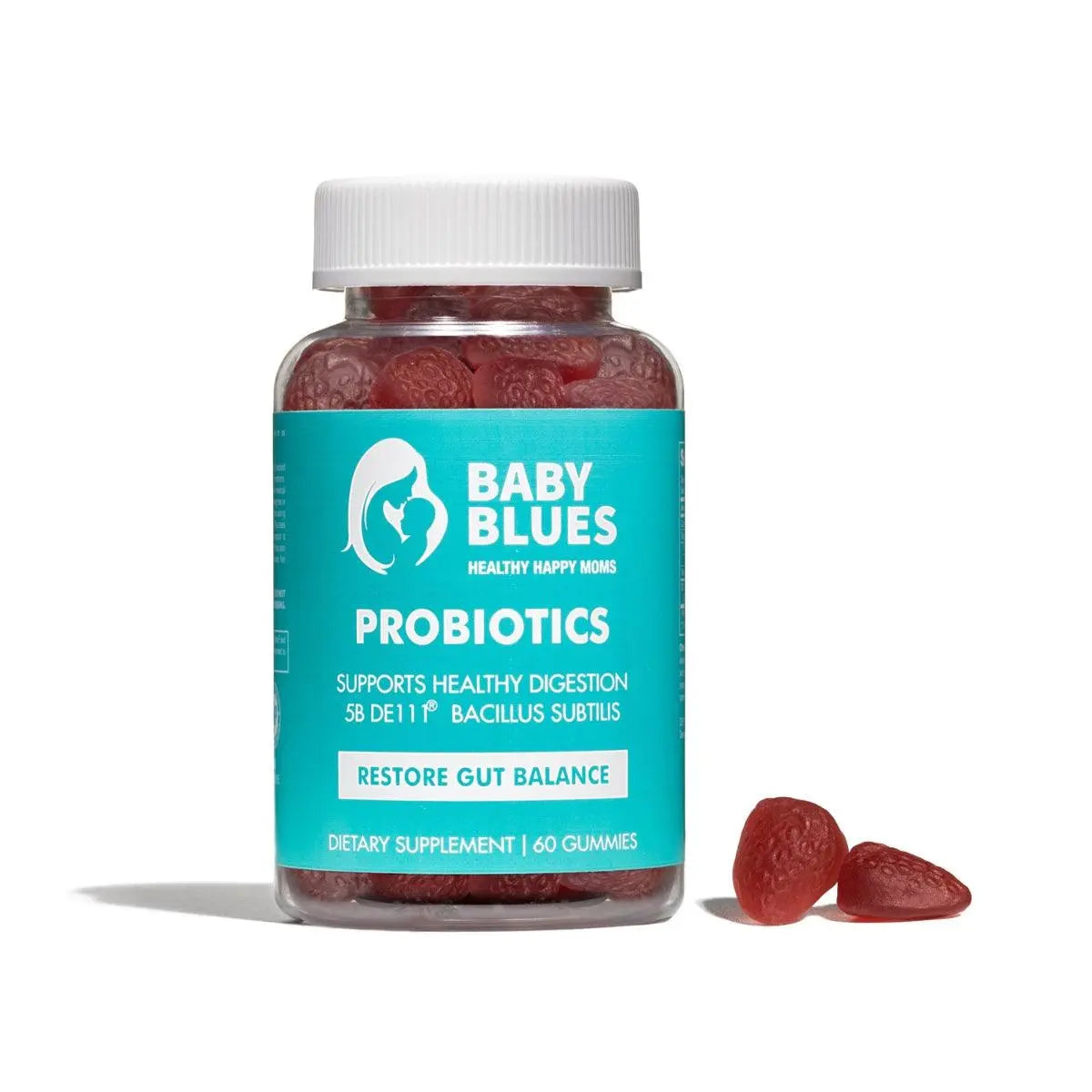
Baby Blues Probiotic Gummies were created with this reality in mind. They’re:
- Powered by DE111®, a shelf-stable, clinically studied strain
- Gentle and easy to take daily
- Free from gluten, gelatin, GMOs, and animal products
- Designed to fit into busy postpartum routines without capsule fatigue
- Just 2 gummies per day, no complicated timing, no extra steps.
6. How to Incorporate Probiotics & Prebiotics into Your Diet
It’s easier than you might think to incorporate probiotics and prebiotics into your diet.
Here are some simple ways to add both to your daily routine:
- Start with Yogurt: A breakfast staple, yogurt is packed with probiotics. Choose plain yogurt with live and active cultures to get the most benefit.
- Snack on Bananas: Bananas are a great source of prebiotics and are easy to digest.
- Try Kombucha: This fermented tea is rich in probiotics and makes a refreshing drink.
- Add More Fiber: Include prebiotic-rich foods like garlic, onions, and whole grains in your meals.
- Consider Supplements: If you’re not able to get enough probiotics or prebiotics through food, supplements can help. Look for those that combine both for maximum benefit.
7. Can You Overdo Probiotics & Prebiotics?
While probiotics and prebiotics are beneficial, moderation is key. Too many probiotics may lead to digestive discomfort, including gas and bloating. Similarly, consuming excessive prebiotic fiber could result in stomach upset or increased gas.
How Much is Too Much?
- Probiotics: Most people can benefit from a daily probiotic supplement, but if you’re new to them, start slowly to gauge how your body responds.
- Prebiotics: Aim for a balance. While prebiotics are healthy, consuming too much fiber too quickly can lead to digestive issues.
If you experience discomfort, consider adjusting your intake and speaking with a healthcare provider for personalized advice.
8. Expert Opinions & Scientific Backing
Research supports the role of probiotics and prebiotics in digestive and overall health:
The National Institutes of Health (NIH) recognizes probiotics for supporting gut and immune health
Studies published in Frontiers in Microbiology and Nutrients highlight Bacillus subtilis strains (like DE111®) for digestive support and gut balance
Research continues to explore the gut–brain connection and its role in mood regulation
9. Conclusion: A Balanced Gut for a Balanced You
Understanding the difference between Probiotics & Prebiotics helps you make smarter, simpler choices for your health, especially postpartum, when your body is already doing so much.
A consistent probiotic routine, paired with prebiotic-rich foods, can help support digestion, nutrient absorption, immune function, and overall balance.
If you’re looking for an easy, gentle way to support gut health daily, Baby Blues Probiotic Gummies offer a routine that actually feels doable: no capsules, no overwhelm, just steady support from the inside out.


